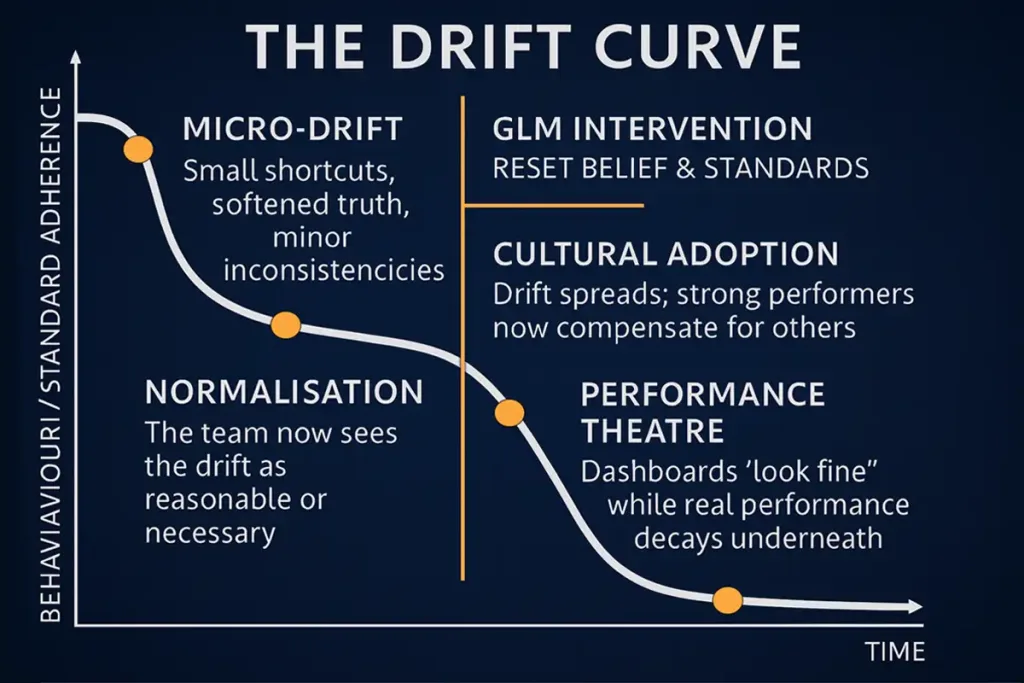
The Drift Curve shows how performance fails in real organisations — not through sudden collapse, but through a series of small behavioural deviations that become normal.
It explains why teams look “fine” long after the system has already begun to break, and how leaders can spot drift at the earliest stage.
Core Explanation
Drift begins with tiny behavioural shifts — shortcuts, softened standards, safe language, avoided truths. These changes are often invisible and feel justified at the time. But once repeated, they become the new norm.
As drift deepens, performance becomes theatre: dashboards stay green, meetings stay polite, but outcomes quietly erode.
The Drift Curve helps leaders recognise the early warning signs, intervene calmly, and reset standards before credibility collapses or the system becomes unmanageable.
Why Drift Matters
Drift is dangerous because it is quiet, reasonable, and socially reinforced.
No one thinks they’re doing anything wrong — until the gap between “what we say” and “what we do” becomes unmanageable.
The Drift Curve gives leaders a way to diagnose silent failure before it becomes visible failure.
Explore more GLM frameworks